
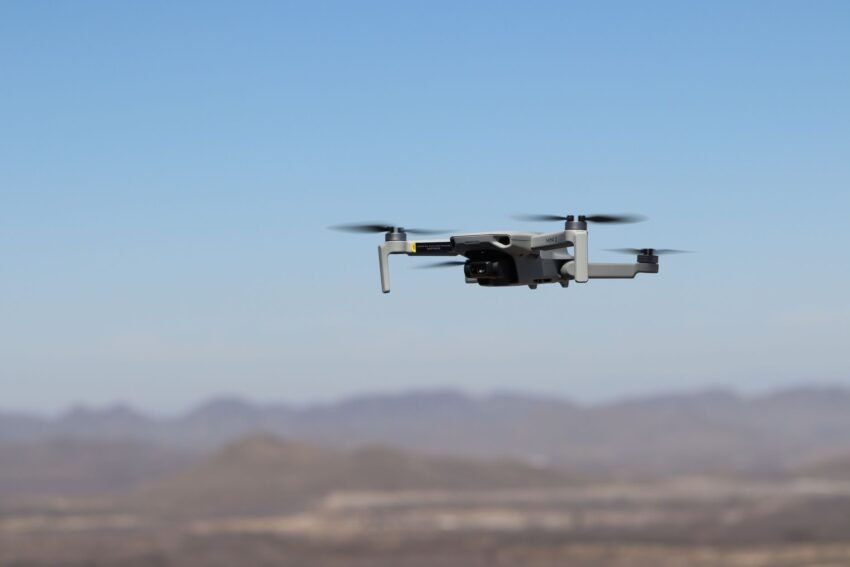
Beam Global (Nasdaq: BEEM) has signed a nonbinding letter of intent to acquire an unnamed European drone technology company, a move that could add U.S. drone manufacturing capacity to a supplier already serving military and government customers. The proposed deal is not complete, and Beam did not disclose the target’s identity, price, financing, timetable or the terms it would need to finalize the transaction.
For defense procurement officials, the consequential change is the prospect of a domestic manufacturing route for a drone product that Beam said has conditional approval from the U.S. Department of War. That approval remains contingent on the target company’s U.S. onshoring plan and updated government vetting, according to Beam. The company said it would manufacture the drones at its U.S. and European facilities if the acquisition closes.
The planned transaction addresses a supply and deployment problem facing agencies that need unmanned aircraft systems but must also account for sourcing, regulatory eligibility, battery support and field operations. Beam said the target develops, manufactures and sells drones along with AI-enhanced drone software. It also said the target product received an exemption from the Federal Communications Commission’s Covered List as a result of its conditional approval, allowing sales in the United States.
Those statements describe the target’s present status, not a completed Beam product line. The target’s continued eligibility would depend on its compliance with the onshoring plan and government review, and Beam cautioned that the parties may never sign definitive agreements or complete the acquisition.
Domestic production is the procurement hinge
Beam said its existing customers include the U.S. Army, U.S. Marine Corps, U.S. Navy, the Department of War and the British Ministry of Defence. The company expects its current factories and engineering workforce could produce the drones after a closing without significant capital investment, a company estimate rather than a disclosed production commitment.
The company also makes batteries for unmanned aerial, ground and marine platforms. It said its BeamFlight product can remotely recharge drones without grid infrastructure or conventional generators. That pairing of an airframe, battery capability and remote charging infrastructure could be meaningful in field operations, where a program manager has to plan for more than the aircraft itself. Beam did not provide technical specifications, production capacity, unit cost or performance data for the proposed drone system.
One potential application would be a military installation or emergency-management organization deploying drones for perimeter inspection, damage assessment or logistics after local power or communications infrastructure is disrupted. If a compatible system satisfied applicable requirements, remote charging could reduce reliance on a fixed grid at a temporary operating site. This is an illustrative use case, not a disclosed deployment or procurement award.
The proposal also lands in a policy environment that favors domestically manufactured unmanned systems. Beam cited a June 2025 executive order directing federal agencies to prioritize U.S.-manufactured unmanned aircraft systems and the Department of War to prioritize certain U.S.-made drones. Whether the future product qualifies for a particular program will still depend on the final acquisition, manufacturing execution, continued vetting and each agency’s procurement rules.
For public-sector technology leaders, the story is less about an immediate fleet expansion than about a potential consolidation of drone hardware, software, batteries and charging support under a company with existing government relationships. That could give agencies another domestic supplier to evaluate. Until Beam identifies the target and closes the transaction, however, the practical value remains a procurement possibility rather than an available government capability.