
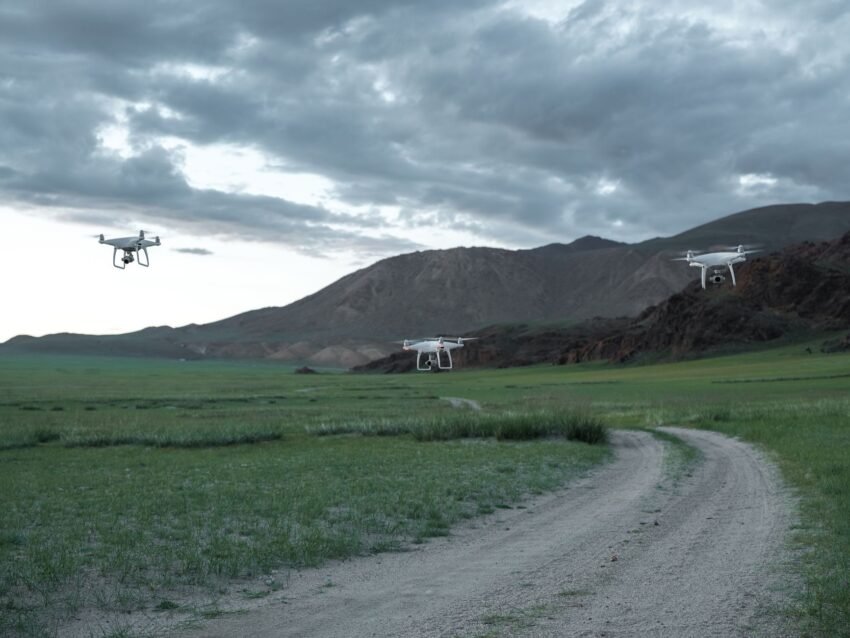
Lantronix (Nasdaq: LTRX) has added its Open-Q 8550CS System-on-Module to the Blue UAS Framework, giving drone manufacturers building for U.S. government programs a vetted edge-computing component before they begin their own aircraft qualification work. The change matters because manufacturers can start with a module that has already undergone component-level scrutiny of its hardware, software, data flows and supply chain rather than treating that work as an entirely new hurdle for every platform.
The Blue UAS Framework is administered by the Defense Contract Management Agency and lists components and software that have been vetted for use in U.S. government and defense unmanned-aircraft programs. Lantronix said the Open-Q 8550CS is listed as a companion computer, the onboard system that can run computing workloads alongside a drone’s flight-control functions.
For an agency buyer, the listing is not an approval of a finished aircraft or a guarantee that a particular deployment will meet mission requirements. It does, however, give aircraft manufacturers and integrators a component with an established place in the framework. That can narrow the supply-chain and cybersecurity questions that must be resolved when a manufacturer assembles a complete system for a defense, civilian or public-safety customer.
The listing shifts component qualification upstream
Lantronix said its review included a complete hardware bill of materials and a Defense Contract Management Agency cybersecurity assessment of encryption, authentication, data-at-rest and data-in-transit protections. The company said the process took more than six months beyond the product’s standard certifications and regulatory approvals. Its chief executive described the review as covering the module’s hardware, software, firmware, data flows and sourcing risks.
The framework addresses a real constraint in government drone procurement. A platform can have capable sensors and airframes but still face questions about the provenance and security of the electronics that process imagery, navigation data and mission software. A listed module does not eliminate system-level testing, configuration review or operational authorization. It can reduce the number of component-level issues an original-equipment manufacturer must establish from scratch, according to Lantronix.
The Open-Q 8550CS uses Qualcomm (Nasdaq: QCOM) Dragonwing QCS8550 silicon and is intended to perform artificial-intelligence processing on the device rather than sending every workload to a remote service. Lantronix said the module provides up to 48 INT8 TOPS of AI performance and includes secure boot, storage security, key provisioning and debug protection. Those specifications are vendor-supplied and do not describe performance in a particular aircraft, sensor configuration or mission.
One potential application would be a manufacturer developing a small unmanned aircraft for a federal land-management or emergency-response program. It could use the listed module to process camera data on the aircraft for functions such as object detection while retaining the aircraft’s own flight-control, communications and mission-system approvals. That is an illustrative use case, not a confirmed Lantronix deployment.
Integration will remain consequential. Drone makers must still verify how the module works with their cameras, radios, power systems and flight software, while government buyers need to assess data handling, maintenance, operator training and the system’s fit with the intended mission. Blue UAS component eligibility also depends on proper configuration, according to Lantronix.
The practical shift is that a government drone program can draw from a wider base of vetted building blocks instead of relying only on complete platforms or repeating early supply-chain reviews for each design. Lantronix has not disclosed a program award or order tied to the listing. Its value will be measured by whether the qualification head start translates into secure, supportable aircraft that agencies can procure and operate at scale.