
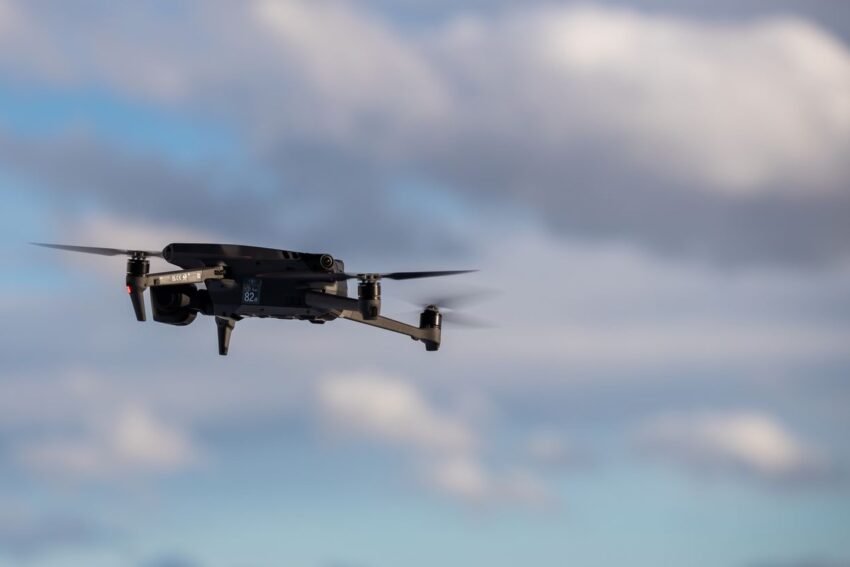
NanoXplore and its battery subsidiary VoltaXplore have qualified for the Government of Canada’s Defence Drone Initiative Marketplace, placing their graphene-enhanced components and lithium-ion battery cells in a pre-qualified supplier pool for future uncrewed-systems opportunities. The designation does not award either company a contract, but it gives Canadian defence buyers a route to consider their materials and energy-storage technologies as drone requirements are issued.
The companies’ qualification matters because small uncrewed aircraft depend on tradeoffs among airframe weight, battery capacity, durability and manufacturing scale. For a defence organization, those choices affect endurance, payload capacity, field maintenance and the resilience of the supply chain behind a drone fleet. The marketplace is intended to connect the Department of National Defence and Canadian Armed Forces with suppliers as Canada develops and tests autonomous systems.
NanoXplore’s qualification covers graphene-enhanced composite components, while VoltaXplore’s covers graphene-enhanced lithium-ion 21700 battery cells. Graphene is a form of carbon that can be incorporated into materials or battery designs. In this case, the companies are proposing lighter structural components and battery cells as domestic inputs to uncrewed and autonomous systems rather than a completed aircraft or a new drone platform.
The technical proposition is relevant to procurement teams because an air vehicle’s structure and power system can constrain what mission equipment it can carry and how long it can remain aloft. A component supplier’s role is less visible than that of the drone manufacturer, but batteries and composites must still meet requirements for safety, performance, production consistency and integration with the finished system. The companies did not disclose specifications for the qualified components, test results, prices or delivery schedules.
Canada launched the Defence Drone Initiative in July, according to the companies, to accelerate development, testing, adaptation and production of domestic uncrewed and autonomous systems. The marketplace is a streamlined procurement mechanism, but qualification alone does not guarantee an order. Each future opportunity would still require the government to define its technical need and assess which pre-qualified supplier can meet it.
One potential application would be a Canadian Armed Forces program evaluating a domestically built reconnaissance drone that needs lightweight airframe parts and locally produced battery cells. NanoXplore and VoltaXplore could compete to supply those inputs, while the prime contractor would remain responsible for integrating the components, completing testing and meeting the program’s airworthiness and mission requirements. This is an illustrative use case, not a confirmed deployment.
For government technology and acquisition leaders, the broader issue is that drone capability is not limited to software autonomy or sensor payloads. Industrial capacity for the physical components matters when a government wants systems it can procure, sustain and adapt without relying entirely on foreign supply chains. The companies said the initiative is part of Canada’s effort to strengthen domestic defence industrial capacity and sovereign capability.
The qualification is therefore a modest but concrete procurement development. It creates a path for the two companies to bid on future work, not evidence that their materials have been selected for an operational Canadian military drone. Agencies will need more detail on performance, integration, certification and lifecycle support before that path translates into deployed capability.