
Kratos Defense & Security Solutions (Nasdaq: KTOS) has received multiple contracts worth more than $100 million to develop prototype mission applications and cyber capabilities that provide space-intelligence data for joint operations. The work centers on collecting and processing radio-frequency signals, a capability that can help military teams build a clearer picture of the operating environment and support the joint targeting cycle.
The contracts give Kratos a meaningful role in an area where defense organizations need to connect space-domain awareness, electronic warfare and cyber operations without treating each as a separate data problem. Kratos said the prototype systems will support RF-signal collection and processing, operational-environment intelligence, targeting, access and battle-damage assessment. It did not identify the customers, program offices, contract periods or deployment locations.
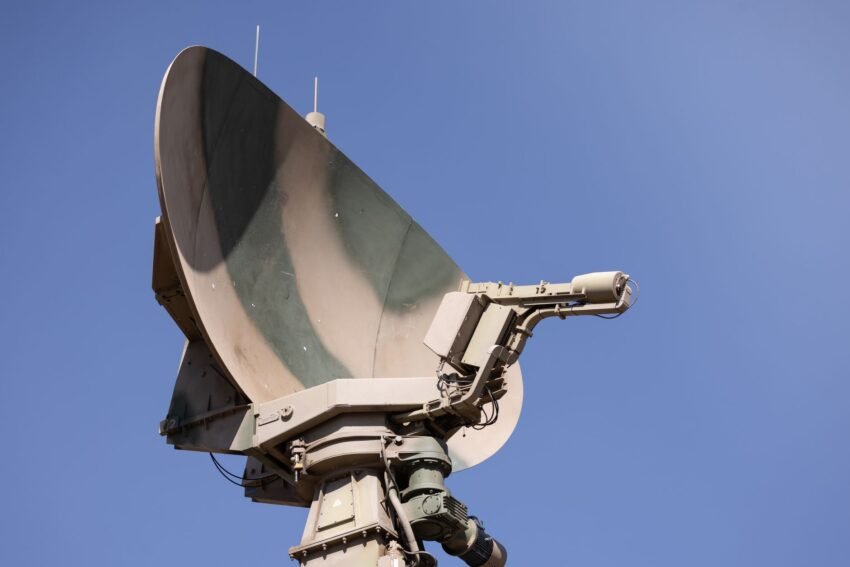
At the core of the work is Kratos’ KnownSpace Network, a global RF-collection infrastructure the company says includes more than 190 sensors in more than 20 locations. The company also plans to use KnownSpace Recon+, a field-portable space-domain-awareness terminal, along with its software, analytics, cybersecurity and signal-processing capabilities. The disclosed work is not a single new product for agencies to procure; it is a set of prototype applications and integrations built on Kratos’ existing technology base.
RF monitoring matters because satellites, terrestrial transmitters and other emitters produce signals that can reveal activity, interference or changes in the electromagnetic environment. Turning those signals into decision-ready information requires sensors, processing tools, analysts and mission systems that can exchange data securely. Kratos said its infrastructure can detect, characterize and understand satellite and terrestrial activity, but it did not provide performance results for the contract work or specify how the resulting applications will integrate with government command-and-control systems.
Prototype work connects sensing to joint mission systems
For government technology leaders, the practical issue is less the number of sensors than the path from collection to an operational decision. A dispersed RF network can generate significant volumes of signal data. The value depends on whether software can correlate it with other intelligence, deliver relevant findings to authorized users and operate within the security and timing requirements of a mission.
One potential application would be a joint operations center using RF-derived indicators alongside satellite and network data to assess whether an adversary has moved, activated or disrupted communications equipment in a contested area. A deployable terminal could extend that awareness to a field unit that cannot rely on a fixed site. Those are illustrative uses based on the capabilities Kratos described, not confirmed deployments under these contracts.
The contracts also point to the growing overlap between space and cyber mission infrastructure. Systems that collect, route and analyze RF data need identity controls, protected data paths, resilient software and a clear operating model for handling sensitive information. Kratos said the work includes electronic-warfare and offensive-cyber capabilities, but did not disclose the specific cyber tools, data-protection architecture or authorities involved.
More than $100 million in awards gives the effort scale beyond a routine research engagement, yet the outcome remains to be demonstrated. Agencies and military organizations will need evidence that the prototypes can integrate with existing mission systems, perform under operational conditions and transition into supportable programs. Still, the work reflects a concrete push to make space and RF intelligence more usable across joint operations rather than leaving it in specialized sensing silos.