
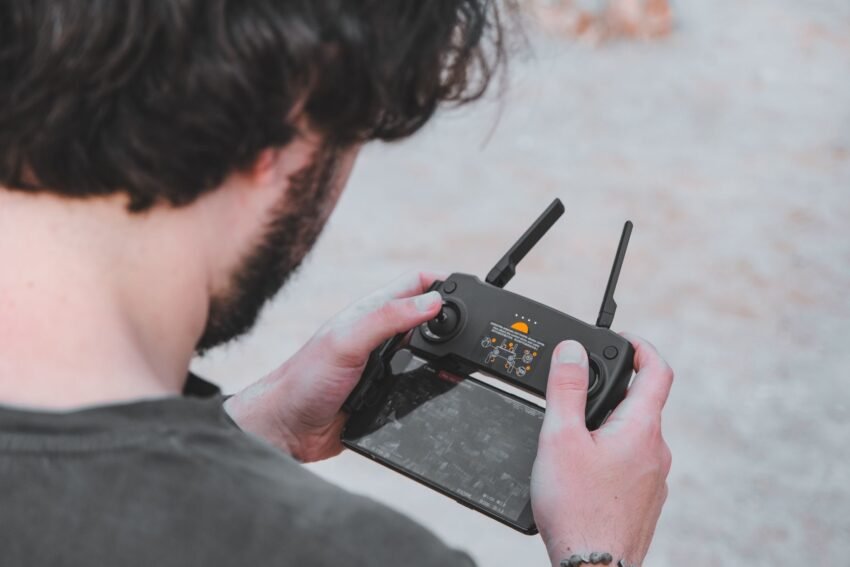
Tessera Defense and Homeland Security Inc. (NYSE American: HLSQ) has received an additional order from an Israeli defense organization to add extended-range antenna systems to an autonomous-systems pilot run by its Zorronet subsidiary. The work is intended to give operators a more complete way to communicate with and control aerial and ground platforms at greater distances, rather than relying on a standalone software deployment.
The order expands a system the customer already bought from Zorronet. Tessera said the pilot will combine third-party antennas with Zorronet’s technology in an integrated package covering communications, processing and control. The company did not disclose the contract value, the defense customer’s identity, delivery schedule or how many platforms the pilot will connect.
For military and homeland-security technology leaders, those limits matter as much as the added hardware. A command-and-control tool must retain usable links and a coherent operating picture when platforms are dispersed, mobile or operating in terrain that makes conventional communications difficult. Tessera said the combination is intended to provide real-time visibility and control in challenging field conditions, but it has not provided independent performance results for range, reliability, latency or operation under interference.
Zorronet’s existing software is built to combine feeds from cameras, sensors and security systems into a common operational picture, according to Tessera. The company says it applies AI, machine learning, computer vision and vision-language models to interpret events in context. In the new pilot, antenna hardware becomes part of that operating model, potentially allowing sensor data and commands to move between a remote operator and autonomous aircraft or ground robots over a longer distance.
The integration step addresses a practical defense-technology problem. Agencies can buy capable drones, ground systems and sensors, yet still struggle to connect them through dependable communications and controls that work with existing command processes. Adding antennas to an established control platform does not solve every interoperability or resilience issue, but it can reduce the need to treat connectivity, sensing and platform control as separate projects.
Tessera characterized the project as Zorronet’s first pilot to combine extended-range antennas and its autonomous-system capability as a complete solution. That description makes the work an operational demonstration, not evidence of a production deployment. The company said the customer is expanding use of the technology, while also cautioning that the pilot could encounter integration, compatibility, delivery and field-performance risks and may not lead to follow-on projects.
One potential public-sector application would be a defense organization coordinating reconnaissance drones and unmanned ground vehicles across a training area or remote border sector. Operators could use a shared interface to monitor approved sensor feeds, communicate with platforms and issue authorized commands without moving every system close to a fixed control point. This is an illustrative use case, not a deployment Tessera identified.
The acquisition and integration burden remains substantial. A defense buyer would need to validate spectrum use, cybersecurity, antenna placement, platform compatibility, data handling and human authorization controls before fielding an integrated system. It would also need to establish how the system behaves if a connection is degraded or a sensor interpretation is wrong.
For government technology decision-makers, the development is a concrete but early signal that autonomous-systems suppliers are packaging communications hardware with software and operational intelligence. Compared with a fragmented approach that procures antennas, sensor analytics and controls separately, an integrated design could simplify evaluation and coordination. Its value will depend on the pilot producing verifiable results under realistic operating conditions and on the customer deciding that those results justify a broader deployment.