
Elbit Systems (NASDAQ: ESLT; TASE: ESLT) has won contracts worth approximately $200 million to supply airborne intelligence, surveillance, target-acquisition and reconnaissance technology, pilot-training systems and head-up displays to an unnamed country in Asia-Pacific. The agreements, which the defense technology company said will run for up to five years, tie sensor modernization and aircrew readiness to a single procurement program.
The customer was not identified, and Elbit did not disclose the number of aircraft, system quantities, delivery milestones or how the contract value is divided among the technologies. Those omissions matter for government procurement teams because they limit any assessment of fleet scale, integration complexity and the likely recurring support burden.
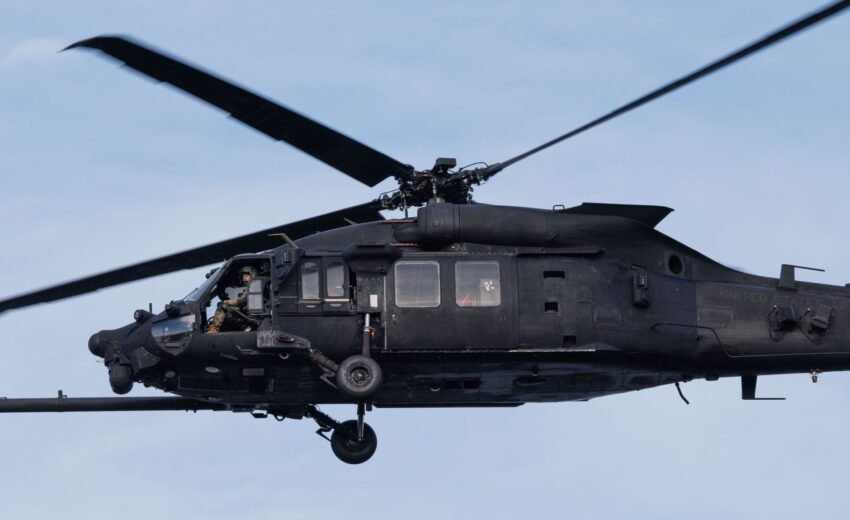
At the center of the equipment package is Elbit’s SPECTRO 12, a compact multispectral intelligence, surveillance and reconnaissance payload intended for helicopter integration. The company said the unit combines high-resolution multispectral sensing, a laser designator, precision-targeting technology and AI-powered image processing for long-range detection, identification, tracking and engagement in difficult weather and other complex operating conditions.
For a government aviation unit, that combination addresses a familiar constraint: helicopters have limited size, weight and power capacity, while mission crews need timely imagery and targeting information. Sensor payloads do not by themselves determine an aircraft’s operational effectiveness, and Elbit did not provide independent performance data. Still, putting sensing, image processing and targeting functions in a compact package could reduce the number of separate systems an integration team must accommodate on a platform.
The contracts also cover follow-on support and upgrades for airborne live-training systems already installed on aircraft. According to the company, those systems can support live, virtual and constructive combat-training scenarios, including air-to-air and air-to-ground simulation, weapon scoring and mission debriefing. The package further includes head-up displays with high-resolution display technology, enhanced video capabilities and low power consumption for day and night use across airborne platforms.
The mix makes this more than a single-sensor purchase. Training and mission systems can create a feedback loop: crews rehearse scenarios, instructors review results, and aircraft return to operational roles with updated equipment and support arrangements. One potential application would be a defense ministry equipping a helicopter squadron for border surveillance, search-and-rescue support or other missions in which crews must identify activity from the air while operating in low light or poor weather. That is an illustrative use case, not a deployment Elbit confirmed.
Government buyers would still need to resolve platform compatibility, data handling, sustainment terms, export approvals and operator training before fielding the equipment. The announced customer and aircraft types remain undisclosed, so it is not possible to judge how quickly the systems could enter service or whether the AI-assisted image processing will meet a particular force’s operational requirements.
For public-sector technology leaders, the practical significance is the scale and breadth of the order. Rather than buying surveillance hardware in isolation, the unnamed Asia-Pacific customer is procuring sensing, pilot training, display technology and ongoing support together. That approach can simplify program alignment, but its value will depend on disciplined integration and the ability to maintain the systems throughout the contracts’ five-year performance window.